How to Make a Small Apartment Look Bigger: Visual and Practical Tricks
23.07.2026
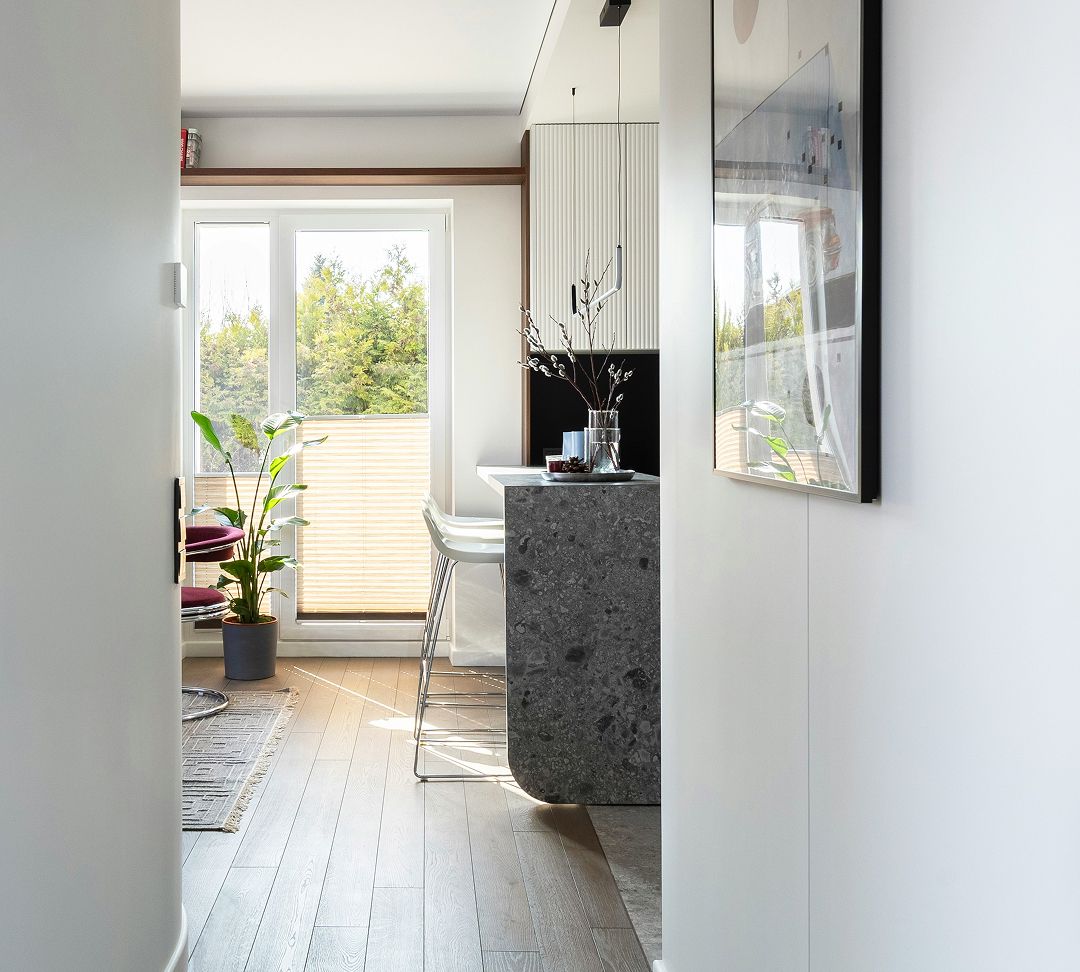
The average square footage of an apartment in Skopje is smaller than what many people would like. The reality of the market, especially for young buyers and renters, often means living in a space of forty to sixty square meters where all the functions of a home must fit - sleeping, cooking, working, socializing.
Fortunately, small doesn't necessarily mean cramped. With a few thoughtful design solutions, the same square footage can look significantly larger and feel comfortable for everyday living. This guide offers practical ideas that don't require a complete renovation or a large budget.
Light colors are your ally
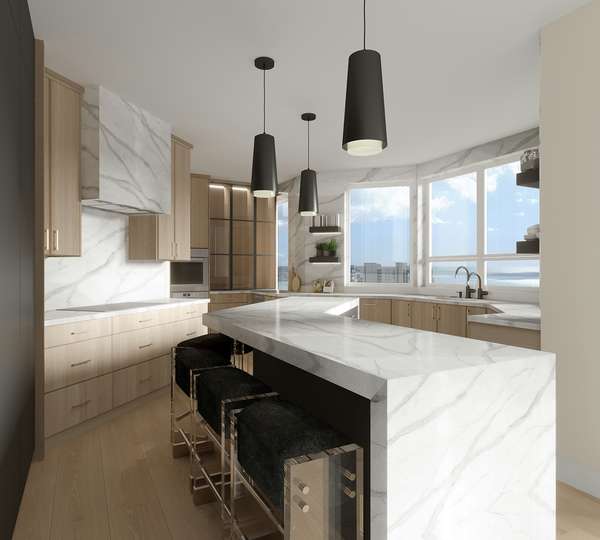
The most basic rule of design for small spaces is simple - light colors open up the space, dark colors close it in. A wall in deep gray or dark blue may look beautiful in a photograph, but in a small apartment it creates an impression of shrinkage.
Light whites, beiges, pastel tones reflect light rays and expand the space visually. This doesn't mean everything has to be sterile white - you can play with warm tones of cream, light gray or soft yellow, while staying in the light range.
The same rule applies to the ceiling. A painted ceiling, especially in contrast with light walls, "lowers" the boundaries and makes the room look shorter. A light white ceiling does the opposite - it visually raises the height of the room.
Mirrors double the light
One of the most powerful solutions for a small space is a strategically placed mirror. A large-format mirror on a wall opposite a window almost physically doubles the amount of light in the room and creates an illusion of additional depth.
It doesn't need to be an expensive decorative mirror - often a simple rectangular mirror in a frame the color of the walls gives the best effect, because it "fits in" and doesn't feel like decoration.
Consider where the natural light is weakest and place a mirror that would reflect light from the window toward that zone. The result is often significant.
Furniture should be functional
In a small apartment, every piece of furniture needs to earn the space it takes up. This means eliminating furniture that serves only as decoration and investing in pieces that have multiple functions.
A sofa with storage space under the seats. A bed with drawers or a storage box under it. A dining table that extends for guests and folds for everyday use. A shelf that also serves as a divider between two zones in an open-plan apartment.
Larger pieces of furniture work better than many small ones. One properly dimensioned sofa organizes the space better than three small chairs and several armchairs arranged without logic.
Vertical space is often poorly used
Small apartments typically have the same ceiling height as larger ones. This means that vertical space is a resource that can be utilized. Shelves that climb to the ceiling, tall cabinets, additional storage levels above doors or windows - all these solutions provide space without taking away floor area.
When the floor is free, the room feels bigger. When objects are distributed throughout the vertical zones as well, the room looks organized instead of cluttered.
In bedrooms especially, tall wardrobes with access to the ceiling can eliminate the need for other furniture elements and free up the floor for walking.
Fewer objects, more breathing room
Minimalism doesn't have to be an aesthetic choice - it can be a practical necessity in a small apartment. The more objects are visually displayed, the more cramped the room looks.
This doesn't mean you have to live with bare walls. It means that every object in the open should have a purpose or real value to you. Books you haven't read in ten years, decoration that was a gift but you don't like, souvenirs from travels that have turned into dust-collectors - all of them actively work against the perception of space.
A systematic approach is a good idea. Once every six months, go through the home and realistically ask yourself about each object whether you use it, whether it brings you joy, whether you'll miss it if it disappears. The result is often surprising and the space almost immediately seems bigger.
Curtains and light
Heavy dark drapes may look luxurious, but in a small apartment they absorb light and reduce the impression of space. Lighter materials, in light colors, that let natural light through even when closed, work significantly better.
Additionally, hang the curtains as high as possible and let them extend wider than the window. This creates an illusion of a taller and wider opening. Curtains that end exactly at window height and curtains that hang below it make the space look cramped.
Zones should be clear, but without partitions
In an open plan, the temptation is to divide functions with physical partitions - shelves, screens, differences in flooring. In a small apartment, these solutions often do the opposite of what's needed.
A better approach is visual zoning without physical partition. A different light fixture above the dining table than above the socializing zone. A rug that defines the sofa area. A plant that naturally marks the boundary between two functions. These solutions define zones, but without narrowing the space.
Questions for viewing
When viewing a small apartment for purchase or rent, think in these categories. What is the approach to light? What are the possible storage solutions without major interventions? Is there open space that can be reshaped? How are functions distributed across the existing rooms?
Often an apartment that at first glance seems too small can be unexpectedly comfortable with smart organization. And conversely - an apartment with more square meters, but poorly arranged, can feel cramped even with minimal furniture.
When viewing a listing on Hommex, pay attention to the layout as much as to the square footage. Certain layouts generally work better for specific lifestyles, and that's a difference that can't easily be changed later. Buy and rent simply, with a clear idea of how the space will serve you.
Related articles
Short-term rental: basics for Airbnb-style letting in Skopje
22.07.2026
New build or old: which is the better choice for your next apartment
10.06.2026

Renting an apartment in Skopje: what to check before signing the contract
13.05.2026

Top 5 Neighborhoods in Skopje for Families in 2026
23.04.2026

Guide to Buying Your First Apartment in Skopje
15.04.2026
Ǵorče Petrov: more space for less money on Skopje's western edge
16.07.2026
Debar Maalo: the bohemian pocket of Skopje's center
14.07.2026
Čair and Gazi Baba: Skopje's affordable market with untapped potential
09.07.2026
Taftalidže: the quiet premium zone between Karpoš and the center
07.07.2026
How to prepare your apartment for sale
02.07.2026

Buying Property as a Foreigner in North Macedonia
12.06.2026
Renovations that pay off: which investments truly increase apartment value
03.06.2026